Engineered Solders Blog
A passage from “Metals Handbook, Volume 6, 1983”
Fact: To achieve a strong, reliable solder joint, it is important to remove all oxides from the substrate as well as the solder. Generally this is done using a compatible flux.
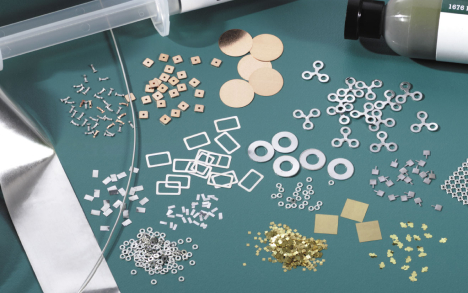
Reality: Sometimes flux cannot be used, so it is important that the starting materials be as oxide-free as possible. Au/Sn is a popular solder in flux-less applications. The preform is a popular form for Au/Sn because it delivers a consistent, controlled amount of solder every time. However, unless properly controlled, the manufacturing process can introduce oxides that become imbedded in the material and cannot be easily cleaned.
Solution: Indium Corporation has perfected its process used to manufacture Au/Sn preforms. This is no small task. Our experienced Metallurgists and Process Engineers have taken a good thing and made it even better. If you’re looking for proof, talk with one of our Application Engineers about evaluating Indium Corp. Au/Sn preforms in your process!
In previous posts, we have mentioned soldering to gold, but never discussed the unique processing aspects related to this.
Soldering to copper is straight-forward. It is done all the time and the typical solders (SnPb or Pb-free) work extremely well on this surface. The only special requirements for this are that the copper is clean and not overly oxidized. Soldering to gold is done nearly as often, but is not as simple.
There are a number of factors related to surface finish which affect solder joint quality on gold.
Soldering to gold rarely implies using a tin solder reflowed directly to gold and forming an intermetallic with gold alone. If that is the case, we must be concerned over the strength of this joint because tin scavenges gold at a high rate, leaving a large proportion of voids at the interface, and the intermetallic formed is very brittle.
Typically, soldering to gold actually involves thin gold plating over nickel and the entire gold thickness is consumed into the solder joint. The resulting solder bond is between the nickel and the solder alloy. The function of the gold is as an oxidation barrier over the underlying metal (nickel in this case). This surface finish is often referred to as ENIG.
An appropriate gold thickness is between 10 and 20 micro-inches. This thickness is great enough to fully cover the underlying nickel, while thin enough to be fully consumed into the solder joint. When this gold is consumed, it makes the solder look grainy, but the joint will be more robust than if all the gold was not consumed.
For the solder to bond with a standard flux, the nickel under the gold plating must be clean. Most precious-metal platers are aware of this; however, care must be taken to clean the nickel prior to gold plating in any soldering locations.
Click here for more information on soldering to gold.
Soldering to non-metallics is of interest in numerous applications. Bonding to crystal, ceramic or glass is requested commonly. One of the best materials for doing this is indium and only one basic tool is needed in addition to a heat source, indium, and the bonding surface. This is a nickel felt applicator.
Jim Hisert has recently posted a video illustrating just how to do this.
Check it out on Jim’s Semiconductor Blog.
If you have Indium Corporation products sitting in your lab that are past their expiration dates, let us know. While we are not a reclaim service, we can still help you determine if it is still acceptable for use, or if it should be replaced. Email us at www.askus@indium.com with label information (or a picture of the label if possible).
Differential Scanning Calorimeter (TA Instruments Q100)
The optimal solder reflow profile for a given assembly involves a peak reflow temperature that is 20-40ºC above the liquidus of the solder joint. This is not the peak temperature the oven should be set at, but the actual junction temperature at the solder location. The amount of energy required to heat an assembly to this temperature varies by product design. Some applications reflow their solder on a thin circuit board which absorbs minimal energy. The peak set temperature for this assembly will be near 20-40ºC above the liquidus of the solder joint. Other applications involve solder reflow onto a copper, aluminum, or stainless metal block. The metal block absorbs so much heat energy, that the peak input energy to reflow the same solder is significantly more.
The typical method to determine the input energy is to process the actual module to be soldered through an oven or other reflow equipment attached to a thermal profiler with thermocouples at the solder location. During this pre-processing, no solder is used.
A customer recently introduced me to another method for determining the input energy required to reflow a solder joint. They used differential scanning calorimetry (DSC). With this process, they inserted their entire module (solder and all) into DSC equipment. When a phase change was detected due to solder melting, a peak appeared, providing the applied temperature. This heat input can later be applied into a reflow profile used to process a high volume of samples.
I do not believe this tactic is as controlled as using a thermal profiler, however it provides another option for solder profiling for those of you with DSC capability. Please comment if you have tried this with success or failure. I'd love to hear from you.
A few of Indium's solder experts ready to assist.
I am well aware that many of you are now working in stressed out, short-handed workplaces and your workloads have increased significantly. With hundreds of solder alloys, forms, and flux chemistries to choose from, it is a difficult (and potentially time-consuming) decision to determine which will best suit a product design. I understand why product engineers miscalculate the effects of chip component choices, or let solder materials be assumed based on historical convention, but hasty decisions open the door to product failures in the field. My expert solder team and I are here to help you make the best solder design decision as efficiently as possible so that this doesn’t happen to you.
When stretched thin, design mistakes happen to the best of us. For example, according to Andy Patrizio, Apple has encountered the misfortune of field failures with one of their most reputable products – the MacBook Pro. Solder serves a number of purposes (in this case as an electrical and mechanical connection) and on the most basic level, the solder must serve these as well as maintain joint integrity for a given amount of time. This can almost always be achieved with a little thought and engineering. According to Patrizio however, the 9600M discrete NVidia graphics chip in the MacBook Pro was designed with chip-attach materials that are failing. The operational temperature of the chip is melting the solder completely.
In the least arrogant way possible, I’d like to make it clear that this chip attach issue would have been simple to prevent had the expertise of my engineering team been enlisted. Let us be your “call-a-friend” lifeline.
I can’t promise that every gold-indium or copper-indium soldering process can work without a flux, but there are tricks to give you a better chance of obtaining the flux-less thermal assembly that eludes so many thermal engineers. The indium itself won’t build up a thick layer of oxides (see Amanda Hartnett’s blog “Indium Oxide Layer”), so the problem is generally the substrate oxides.
Some people have used an emery cloth followed by an alcohol rinse for Cu oxide removal, which should work. The surface preparation that is used in labs is different though. I prefer to use 15% - 20% Nitric Acid or 5% - 15% Sulfuric Acid to clean copper for 2 – 5 minutes. Other acids are also used – it is just important that the acid is strong enough to remove the oxides, and can be fully cleaned after etching is complete.
While the acid etch process can be used to remove initial oxides, it does nothing to protect the surface from oxygen attack during reflow. This requires flux or forming gas. The reducing chemical reaction between hydrogen based forming gas and oxides starts to occur at or above 275degC. Below that temperature, the gas works as an inert atmosphere. The Au and Cu parts may be cleaned very well by exposing them to this gas at a high temperature, and introducing clean indium at a lower temperature (using the gas as an inert atmosphere). Superheating the indium to +275degC is not advised though, since excess intermetallics may result.
The hydrogen will not be a true reducing atmosphere at typical indium reflow temperatures. Although the forming gas does nothing for indium, it will at least be of use with the Au and Cu metallizations. The inert properties of the gas will definitely help protect the assembly from oxygen at soldering temperatures.
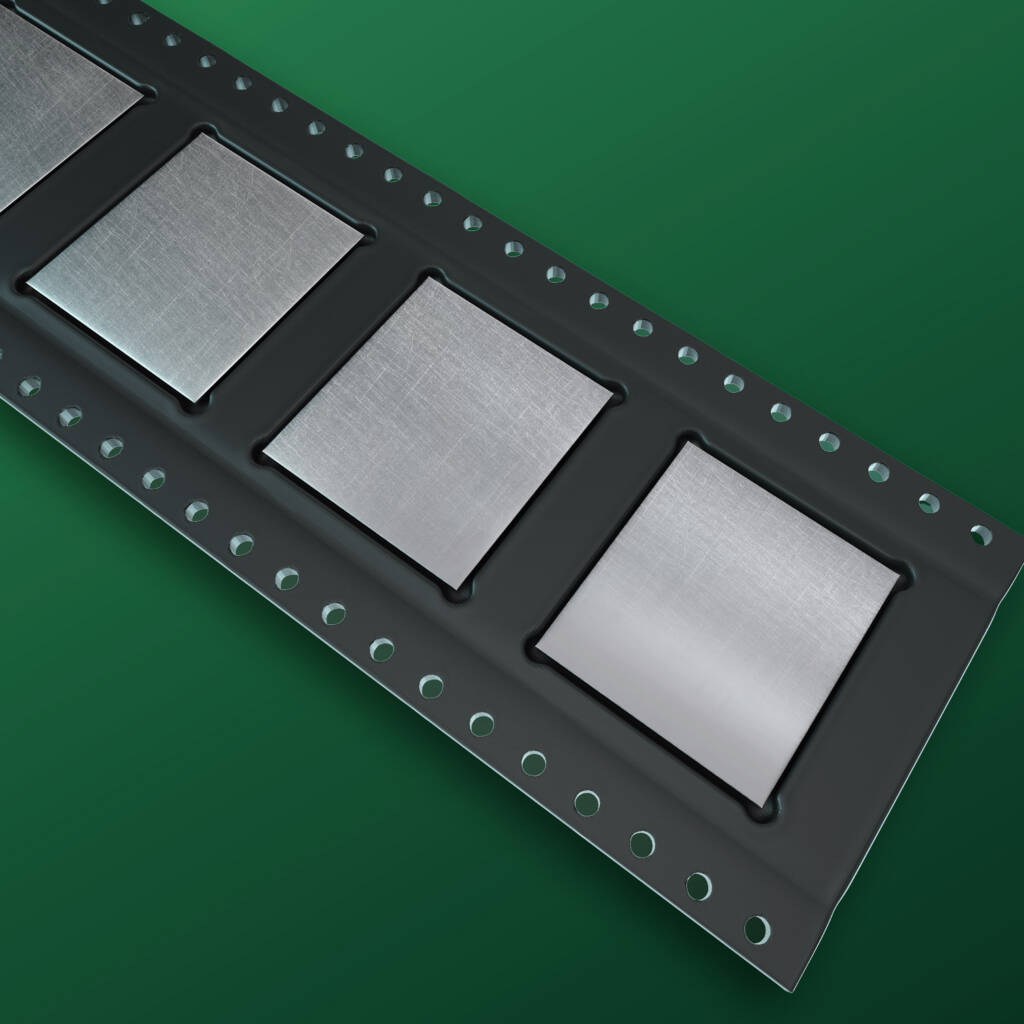
Tape and Reel
Tape and Reel has been on my mind a lot lately. Staying on top of this preform packaging trend is important.
Whether we're looking for the right size pocket, cover tape, or even the orientation of the part, the name of the game is always performance. If the peel force isn’t within a tight spec or the pocket is too large, then a drop in pick performance is imminent. Everyday there is a new challenge and new part someone wants placed in tape. Just when we think we’ve seen it all, a customer will come to us for help on something new.
Were always looking for new challenges, so feel free to contact me with yours.
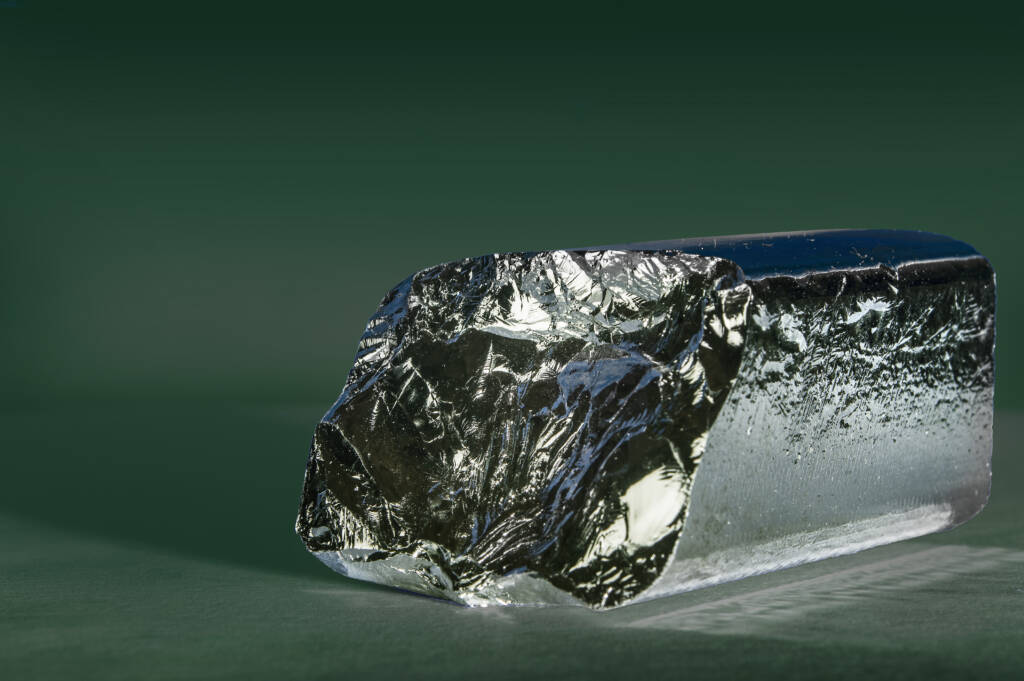
When you think of solders, you generally think of tin, lead, copper, silver. But have you ever considered bismuth?
Bismuth as a pure metal has a melting temperature of 271F but when bismuth is alloyed with other metals, it can bring the melting temperature of the resulting alloy down considerably. For example 58 Bismuth 42 Tin alloy is a eutectic alloy that melts at 138F. And there are a whole host of bismuth contained alloys that fall below the 100F range.
While this wide range of lower melting temperature alloys will not put them in the mainstream of electronics assembly, there are plenty of other applications including step soldering where they will be very useful. Stay tuned to this space for more ideas on using bismuth.
For more information, go to Bismuth.
Once you have an understanding of the type of solder needed for an application, (a hard solder such as AuSn for reflow temperatures above 125°C or a soft solder such as SnPb or SnAgCu for lower temperatures) it is time to consider the impact of the substrate metallization on your solder choice.
Common surface finishes for soldering include gold (ENIG), copper and OSP, immersion silver, tin, and nickel. Each element reacts differently with these finishes and solders should be carefully chosen to match the finish to prevent issues such as brittle intermetallics and excessive scavenging.
The data sheet titled flux and solder compatibility found here recommends solder choices for various substrate finishes as well as incompatible solders.
For more assistance in choosing an appropriate solder for your particular application, please feel free to contact me directly.
">Digg this
Common surface finishes for soldering include gold (ENIG), copper and OSP, immersion silver, tin, and nickel. Each element reacts differently with these finishes and solders should be carefully chosen to match the finish to prevent issues such as brittle intermetallics and excessive scavenging. ">Add to del.icio.us
Common surface finishes for soldering include gold (ENIG), copper and OSP, immersion silver, tin, and nickel. Each element reacts differently with these finishes and solders should be carefully chosen to match the finish to prevent issues such as brittle intermetallics and excessive scavenging.