Mọi người ơi,
Tiến sĩ Ron: Trong một số bài đăng tiếp theo, tôi muốn trò chuyện với Jon Major, Giám đốc sản phẩm vật liệu giao diện nhiệt kim loại (TIM) của Indium Corporation, về TIM kim loại. Jon, anh có thể cho chúng tôi biết đôi chút về bản thân anh không; lý lịch kỹ thuật của anh, cách anh kết nối với Indium Corporation, cách anh quan tâm đến TIM, v.v.?
Jon: I’ve always been passionate about product development, engineering, materials, and manufacturing. I was fortunate enough to start my career in Silicon Valley, working with the brightest engineers on the planet; I had the opportunity to work on several groundbreaking products, such as the first iPad Air, the first cloud-based smartphone called the “Sidekick”, the first internet connected radio, and several other mobile devices, as well as an IoT platform for connected vehicles.
Jon: Thermal management was always considered at the design level, especially when dealing with consumer products. At Indium Corporation, I have the opportunity to dive deep, not only with the materials themselves, but how they perform with various surfaces, pressures, under varying warpage conditions, and how long they will survive under different use conditions. Our principal thermal engineer recently developed an in-house thermal test vehicle that provides the representative environment for examining performances of thermal interface materials. It’s rather fascinating! I was happy to be a part of a project that enables us to give our customers valuable data on how metal-based TIMs perform under varying conditions.
Tiến sĩ Ron: Jon, bạn có thể giải thích ngắn gọn tại sao cần có TIM kim loại và chúng hoạt động như thế nào không?
Jon: As integrated circuit (IC) technology has advanced, the amount of heat generated by a high-performance IC is staggering, sometimes exceeding 1,000 watts when the IC is only slightly bigger than an inch (2.5 cm) on one side. The IC typically needs to operate at less than 100°C or its life will be too short. Without TIMs to conduct the heat away from the IC and to the heat-sink, this goal would be impossible.
(Hình 1 cho thấy sơ đồ của IC có hai TIM để dẫn nhiệt đến bộ tản nhiệt.)
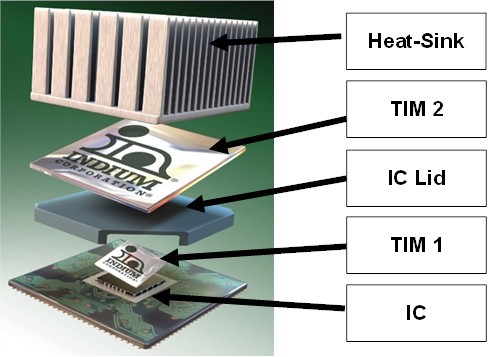
Hình 1. TIM1 dẫn nhiệt từ IC đến nắp gói IC. TIM2 dẫn nhiệt từ nắp gói IC đến bộ tản nhiệt.
Jon: In the past, polymeric (traditional) TIMs, gels, and other non-metal TIMs were used. In some applications, they are still used today. The most common was thermal grease, which has been used for many decades. Thermal grease has a carrier that is almost like Vaseline®. The carrier is loaded with conductive particles. The thermal grease is then applied where the metal TIMs are in Figure 1. Thermal grease has two shortcomings. One is that its thermal conductivity is not sufficient to meet higher-heat fluxes generated by high performance computing (HPC), AI, accelerated process unit (APU), and graphics processing unit (GPU) trends. The other is that the on/off cycles of electronics can cause “pump-out.” Pump-out occurs when the thermal grease is pumped-out from the space that it occupies to conduct heat away from the IC. With the thermal grease pumped out, it can no longer perform its function.
Jon: This is where metallic based TIMs come in. They can provide the lowest thermal resistance and be customized for package-specific needs. They also do not typically experience pump-out.
Jon: Với sự tiến bộ của HPC, chúng tôi thấy khách hàng gặp thêm nhiều thách thức do hiện tượng mỏng và cong vênh của die, nhiễu xuyên nhiệt (nhiệt từ các thành phần lân cận) và nhiều thách thức khác về thiết kế. Nhu cầu về TIM dựa trên kim loại tiếp tục tăng vì chúng có thể giải quyết nhiều thách thức này và cung cấp hiệu suất và độ tin cậy cần thiết trong các ứng dụng mật độ công suất cao.
Jon: Trong khi mục đích chính của TIM là giúp truyền nhiệt từ bề mặt nóng sang bề mặt lạnh, thì vẫn có những thuộc tính khác cần xem xét trong một số ứng dụng nhất định (ví dụ: dễ lắp ráp, độ tin cậy, tính bền vững). TIM gốc kim loại có thể được phân loại thành hàn (nung chảy lại), nén được (không nung chảy lại), gốc lỏng (TIM kim loại lỏng) hoặc TIM đổi pha. TIM đổi pha được thiết kế để đổi pha khi đạt đến một nhiệt độ nhất định. Chúng tôi sẽ đề cập đến tất cả các TIM kim loại này trong các bài đăng trong tương lai.
Jon: TIM kim loại có lợi thế là có một số độ dẫn nhiệt khối cao nhất trong các vật liệu TIM, nhưng điều quan trọng là phải nhận ra rằng độ dẫn nhiệt khối không phải là tiêu chí duy nhất để lựa chọn TIM. Điện trở tiếp xúc nhiệt hoặc điện trở giao diện thường chi phối điện trở nhiệt TIM tổng thể. Do đó, độ ướt bề mặt cao, để giảm thiểu điện trở tiếp xúc nhiệt, là tiêu chí hiệu suất TIM quan trọng.
Tiến sĩ Ron: Theo tôi hiểu, TIM1 thường là TIM hàn. Bạn có thể giải thích cách chúng hoạt động không?
Jon: TIM1 is commonly referred to as the interface between the backside of a die and the underside of an integrated heat spreader (IHS) and component cap. A soldered TIM (sTIM) at this interface is the “Cadillac” of TIMs. Once reflowed, sTIMs form intermetallic bonds that provide low interfacial resistance. Coupled with the fact that metal-based TIMs have high bulk thermal conductivity, the sTIM provides very low overall thermal resistance. sTIMs also mechanically fasten the die and IHS together given there is an intermetallic compound (IMC) formed at the interface. Often, we are asked if the rigidity of the solder joint could cause problems during power cycling. With the proper alloy and process, the sTIM can provide the ductility necessary during the life of the package, so rigidity issues are not a concern.
Jon: There are many process considerations when selecting a sTIM. Indium Corporation has the experience and guidelines to help customers realize the benefits of sTIMs. One of the challenges in assembling TIM1s is voiding during reflow (see Figure 2). Voiding becomes worse after multiple reflows.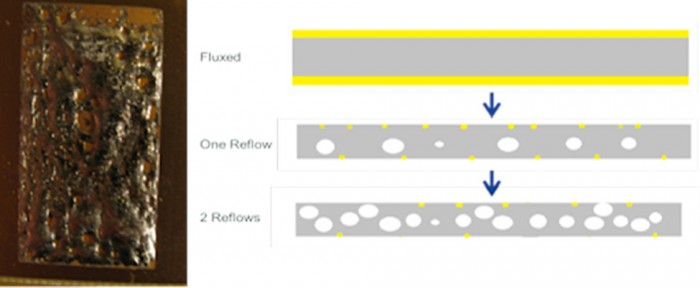
Hình 2. TIM1 được đặt giữa chip (hoặc khuôn) và IHS.
Tiến sĩ Ron: Tôi hiểu là đã có một số đột phá trong việc giảm tình trạng đi tiểu, ông có thể giải thích không?
Jon: Theo truyền thống, sTIM chủ yếu được sử dụng trong các gói theo phong cách LGA hoặc PGA. Các gói này được nấu chảy lại một lần để nấu chảy lại sTIM. Do những lợi ích mà sTIM mang lại, người ta đang nỗ lực tìm ra vật liệu sTIM tối ưu và quy trình cho các gói có thể tồn tại qua nhiều chu kỳ nấu chảy lại BGA, thường có nhiệt độ đỉnh là 240-250°C. Với mỗi lần nấu chảy lại tiếp theo, vật liệu sTIM truyền thống sẽ biểu hiện sự phát triển lỗ rỗng dẫn đến hiệu suất nhiệt kém.
(Hợp kim InAg cho thấy sự cải thiện đáng kể so với indium nguyên chất trong việc giảm sự phát triển của lỗ rỗng trong các lần nấu chảy lại tiếp theo. Xem Hình 3.)
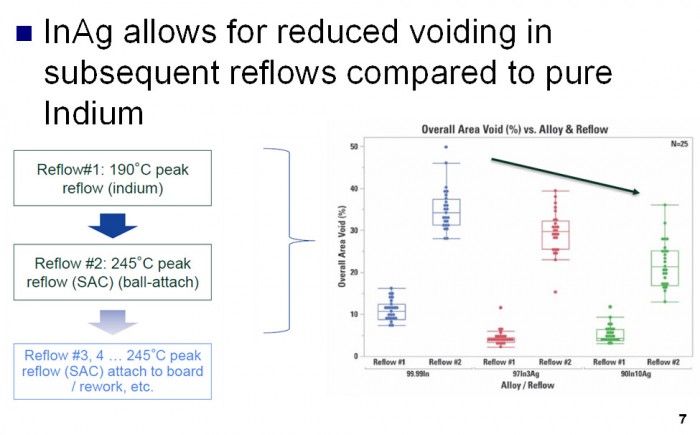
Hình 3. InAg TIM1 làm giảm đáng kể tình trạng đi tiểu nhiều hơn so với In TIM1.
Jon: However, there are trade-offs to adding Ag to the solder joint. More Ag also means lower bulk thermal conductivity and a more rigid solder joint leading to reduced mechanical reliability. There is significant research underway to understand how different compositions of InAg wet to various surfaces and how they perform during reliability testing. High surface wetting, to minimize thermal contact resistance, is a critical TIM performance criterion. In addition, poor wetting can result in higher voiding, also leading to poor thermal performance. With the proper alloys selection, flux and process considerations sTIM can be adopted in Flip Chips BGA(FCBGA)style packages that will undergo multiple reflow cycles (see Figure 4).
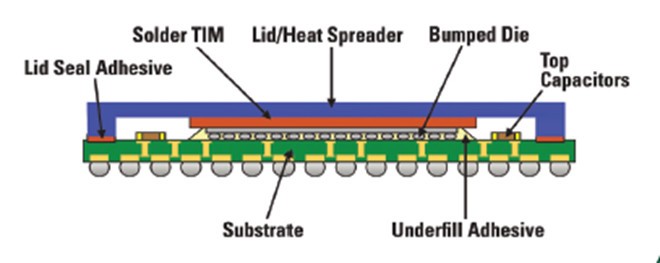
Hình 4. InAg sTIM phù hợp với FCBGA.
Mọi người ơi,
Hãy theo dõi bài đăng tiếp theo của chúng tôi về mTIMS1.5!
Chúc mừng,
Tiến sĩ Ron