Phil Zarrow: This video is for anyone interested in mitigating head-in-pillow and non-wet open defects.
Head-in-pillow and non-wet open defect, what is the difference?
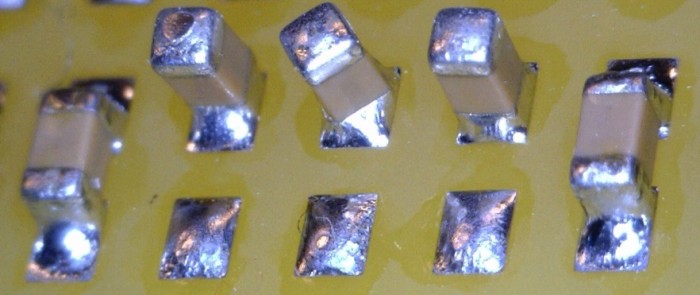
Glen Thomas: They're both very similar defects, but there is a fundamental difference, which is important. The more traditional head-in-pillow is where you end up with solder on both sides, on the board itself and on the component during the reflow, and the two solder areas move apart. With the head-in-pillow, you end up with that little divot that looks like somebody place their head in there. At the end, after everything is relaxed back to its normal state, you have that, possibly, an intermittent connection, at the very least, a poor mechanical connection.
The difference between that and the non-wet open is all of that solder paste that was originally on the pad of the circuit board is sucked up onto the component side. When it's all said and done, it looks like there is actually no wetting on the board itself. Now, we all know that's not true, but that's what it looks like.
Both these defects, as I think you well know, Phil, are particularly bad because they're not easy to be found. The only way someone can determine they're there is to do an X-ray, which is time consuming, expensive, and, in most of the cases, the customers don't want to do that. They prefer not to do it. Indium10.8HF was specifically developed to address non-wet opens, which is a newer defect that many customers are just now starting to see.
Phil Zarrow: Glen, where can we find more information on this topic?
Glen Thomas: The most obvious place is to go to our website at indiumstg.wpenginepowered.com, or if you prefer, you can send us an email directly at [email protected].
Phil Zarrow: Glen, it was a pleasure. Thank you.
Glen Thomas: Same here. Thanks very much.
Keywords: Phil Zarrow, Glen Thomas, [email protected], head-in-pillow, non-wet open defect, solder, solder paste, defects, circuit board, , Indium10.8HF, Indium Corporation
Lưu Lưu