As interns at Indium Corporation, we work on grand projects with real impact on the company. These are meant to challenge and motivate us for 10 weeks, which means they are big, lengthy projects. When I first saw my project during the kickoff meeting my supervisor put together, I was excited to tackle this big challenge, but a small part of me thought to myself, “Wow! Where do I even start?” Now, going into the last few weeks of my internship – which passed by too fast – I want to share my learnings on how to succeed in a big engineering project.
The first step is to ask questions early on. Having answered queries up front ensures full understanding of the project, which avoids future mistakes. The path to fully comprehending your task can take shape in various ways, including grasping the workings of a piece of equipment, machinery, or creating something from scratch, and knowing the customer requirements by heart.
In my case, it was crucial for me to understand each stage of the machine I would be working on. For this reason, during my first day in the office on the kickoff meeting tour, I asked my supervisor and the team as many questions as it took me to completely grasp the machine and my task. The main idea behind this is to never sit on a question and assure others of a nonexistent understanding of the task. Spending time on the initial stages of a project and making well-informed design decisions not only prevents mistakes down the road, but it also saves the company money.
Adding to what I said previously on customer requirements, it is vital for a project to ensure there is a team of stakeholders who have a clear idea and communication of their production buying, design requirements, interests for the project, and most importantly, what they want to see. In other words, the stakeholders need to have a transparent concept of the project scope. In my case, it would have been very harmful for my project if I had not had all the information and an explicit idea of what I was working towards.
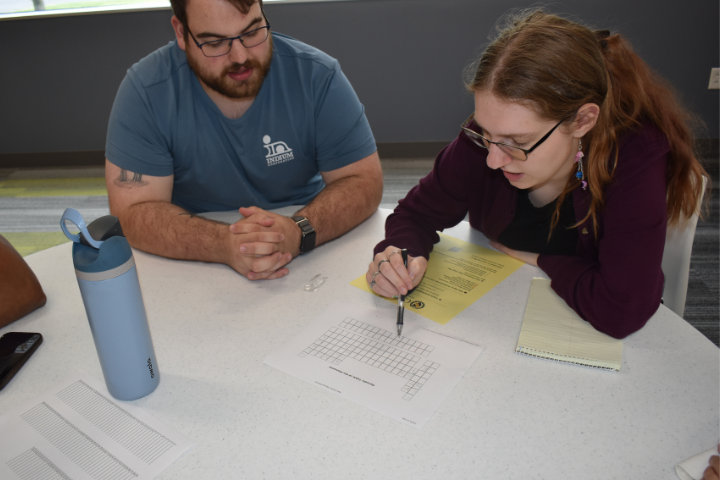
Secondly, it is important not to fear sharing ideas, even if these are only thumbnail sketches. And this connects with the value of receiving feedback. When one vocalizes their ideas, they give others the chance to evaluate their thoughts from a distinct perspective – and if that someone is an intern, it is highly likely that others will have a more experienced perspective. Naturally, sometimes we feel attached to our own ideas, which can be blinding. That is why it is crucial to have a second opinion, especially one with more expertise, to make an evaluation.
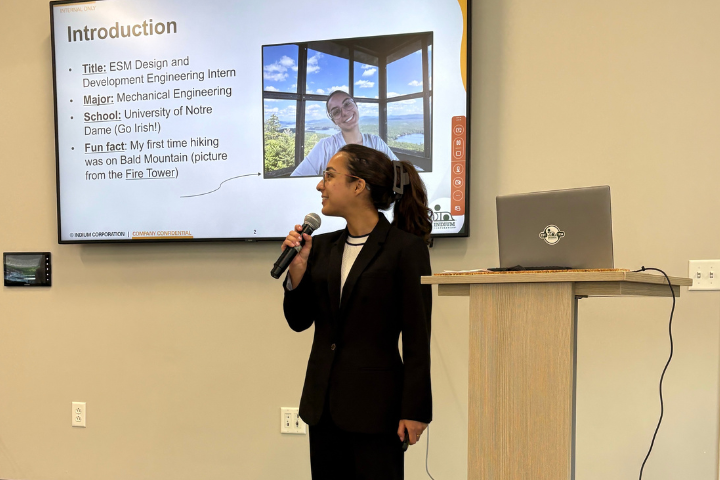
For example, I have led two design reviews with the Engineered Solder Materials (ESM) team. During those, I shared the current state of my project’s 3D model, its materials, my design decisions, and ideas moving forward. After that, I got to receive feedback and suggestions on how to improve it. A fear of speaking one’s own thoughts is completely understandable, as it puts a person in a vulnerable position. But being open to criticism and receiving feedback, especially as an intern, is a blessing. In my experience, it was sharing my ideas and receiving constructive feedback from my supervisor and teammates where I learned and grew the most – and, for that I will always be grateful.
Another point is to take one step at a time. When working on a big project, there will be many problems to solve all at once. Before one gets too overwhelmed by all the decisions that need to be made, my advice would be to start small and solve one thing at a time. Like in any task in life, we need to start somewhere; it is always possible to make a not-so-feasible idea into something good, but it is impossible to make something good out of nothing. This directly connects to the previously discussed point of feedback; once an idea is thought out, even a small one, it is ready for feedback – the project can build off something and move forward from there.
More on the step-by-step approach to big projects, I put that into practice this summer by first breaking down my project in three stages. Each stage had its own objectives and challenges. The best thing about this approach is that, once the project has its subdivisions, it becomes clearer to the engineer— as it became clear to me— what order the decisions and operations need to be made. From there, it is easy to infer what steps need to be taken and where to start.
Still along the same lines, it was highly beneficial for me to keep track of these steps, and I did that daily by planning the tasks for the following day. Of course, no day looks the same as an engineer at Indium Corporation, so I planned as thoroughly as possible, but always saved room for the unexpected. This way, when arriving at work, there was always a to-do list ready, and the goals for that day were clear, even at 8 a.m. Adding to that, by doing this on a daily basis, I can always go back on my notes and keep track of my steps, most importantly what and when decisions were made.
This allows me to segue onto the realm of documentation. It is best practice to write down all your notes and always have pen and paper in your hand. Documentation is often overlooked, especially if it is not a requirement, or, in the college students’ case, if there is not a professor requesting it. However, it can go a long way.
If you work near my desk in the office, you have probably seen the stack of forty pages of notes I took, and that pile contains the math, sketches, and important information on every single design decision I have taken throughout these seven weeks. I guard those with care, as every time I need to go back to a decision I made, from the dimensions of a part to power calculations, I know exactly where to look for it. That saves time, but it also allows me to communicate my engineering process to someone else, an extremely important skill in engineering.
Finding the balance between independent work and knowing when to ask for help is a skill developed over time. Engineers should be able to work independently and solve problems by themselves. Interns especially might not be used to this level of independence. It is easier to ask a supervisor for help whenever a problem arises; however, it is when we struggle on our own that we learn the most.
That said, it is just as important to know when to ask for help. It is not ideal to be stuck on a problem for too long— it is exhausting for the employee, and it costs the company money— and by knowing when to reach out to someone else who has a different perspective, the team as a whole will move faster. The trick lies in knowing the difference between “I am puzzled on where to go from here” and “I have tried all routes and there is nowhere to go from here.” In the first case, the engineer is still on track, making their own path; in the second case, however, most options were exhausted and it is time to ask for advice.
At Indium Corporation, people are eager to share their role and teach interns. Try to learn from those around you. For example, I gained most, if not all, of my machining knowledge this summer by going to the shop and shadowing the Machinists and Tool Makers. Because they were so willing and eager to teach me, I learned how to operate different machines, use measuring tools I had never seen before, and received feedback on my engineering drawings. This feedback is extremely valuable, as I will be able to communicate my parts more effectively and clearly in the future.
In conclusion, because I asked questions early on and did not fear sharing my ideas, I knew I was moving in the right direction. By documenting my steps in to-do lists and notes on paper, I stayed organized and set myself up for success, as I was able to communicate ideas and my thought process clearly, and, consequently, got better feedback. Lastly, working independently and learning from my coworkers made me a better person and engineer for two reasons: I now deal with struggling in a more positive way, and my machining experience will allow me to be more intentional with my designed parts.