Included in a solder paste’s Product Data Sheet, among other things, are general guidelines which aid the customer in designing an SMT reflow profile. The data sheet gives general recommendations, for time above liquidus, peak temperature, and ramp rate.
Exemple :
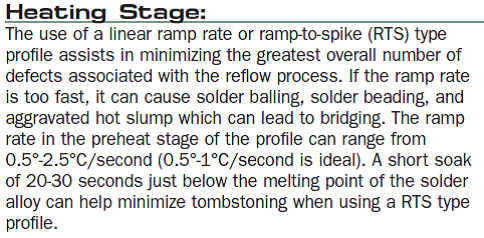
Figure 1: Example shown Indium8.9 flux with SAC lead-free alloy
The reason for approaching this subject is that often there has been some confusion in regards to the difference between max slope (a category reported on most profiling software) and the ramp rate listed on a data sheet.
La pente maximale est très souvent atteinte dans la première zone lorsque le circuit imprimé passe de la température ambiante au four. Dans la plupart des cas, le réglage de la zone du four pour la première zone est de 100°C ou mieux. Le changement de température entre la température ambiante et la première zone est alors d'au moins 75°C (en supposant que la température ambiante est de 25°C) et il est donc facile de voir que le plus grand changement de température (pente maximale) dans la plupart des cas se trouve typiquement dans la première zone.
L'objectif de la pente maximale est plus du point de vue des composants, pour éviter les chocs thermiques, 3°C/s sont généralement recommandés comme limite supérieure.
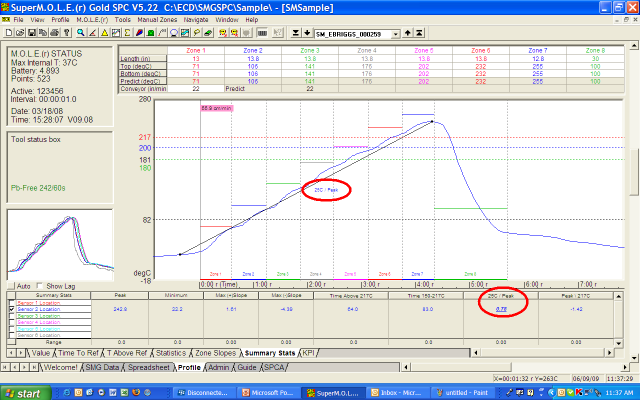
Figure 2. Ramp or Average Rate
The ramp rate may be better described as the rate (change in temperature over time) from ambient (room temperature) to peak. And is more practically used in a ramp to spike type profile
From the view point of the solder paste, the lower the ramp rate the better, usually 1-2°C/s. This is to drive off volatiles and help minimize solder defects such as solder balling, solder beading, and tombstoning. This rate becomes even more important as the solder paste deposit continually decreases in size, as we move to 0201’s and smaller discrete components and from 0.5mm pitch area array packages to 0.4mm and smaller. Due to this miniaturization, the observance of graping and head-in-pillow have become more common. The reflow process window is becoming very narrow and this attribute (ramp rate) has become as important as time above liquidus and peak temperature.
I’d love to discuss this with you, if this topic is affecting your SMT process. If you’d like, feel free to contact me.