
콘텐츠로 건너뛰기

The Modern Skillset: Why My New Technical Capabilities Matter for Tomorrow

As a mechanical engineering student, I have always been interested in simulation and design because it allows engineers to predict how products will perform before they are even manufactured. When I accepted this internship, I hoped to gain hands-on experience using industry-standard software and learn how companies develop reliable products. I quickly realized that this project would involve much more than simply creating simulations: it required understanding the science behind the material itself.

When first starting my internship, I knew I would be working with solder materials and finite element analysis (FEA), but I didn’t fully appreciate how much engineering goes into understanding something as small as a solder joint. Over the past several months, I have been immersed in the material property development for Indium Corporation’s solder alloys within FEA simulations. This also informed me on how experimental testing and computer simulations work together to improve the reliability of modern electronics.

In the beginning of the internship, I assumed the project I was taking on would mainly involve running simulations in FEA software. I quickly learned that every accurate simulation begins with good experimental data. Before a computer model can predict how a solder joint can behave, engineers need to understand exactly how the material responds under different loading conditions. That realization completely changed my perspective on simulation-driven engineering.

Typical Day

Within this internship, my days within the office space are different from day-to-day. This could involve having multiple important meetings within a single day, needing to run simulations and comparing results to experimental results, or having a more relaxed day where it is just doing research and documenting my findings.

The research I typically would do is based on finite element analysis, material properties, and reliability parameters. When conducting research, I typically bounce conversations back between ChatGPT and relevant documents from prestigious universities. I would research topics based on the material properties that are required within the simulation workspace. This research would also extend to topics based on reliability simulation input parameters and the desired results.

The typical simulations I would run from day-to-day would consist of generating a basic model that represents a tensile test specimen that was used to obtain the experimental results being compared. I would then go through and insert the specific properties needed along with the boundary conditions. Afterwards, I would inspect the results from the simulations and then compare them to the experimental results after testing.

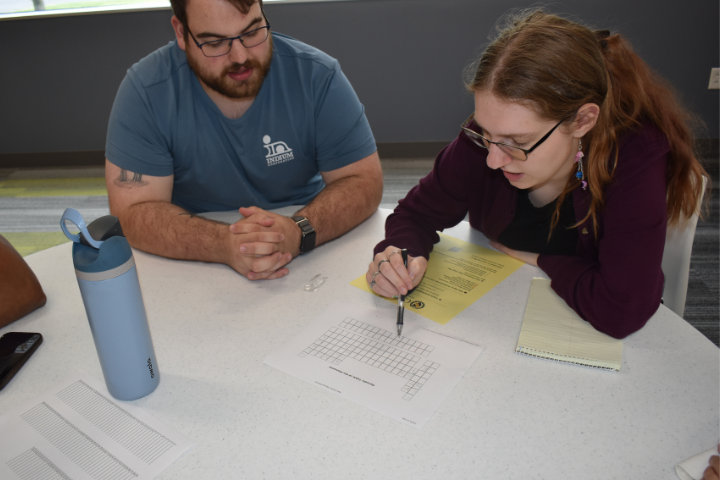
Some days would consist of multiple meetings, whether it was with other interns, my supervisor, or other important individuals. These meetings would consist of discussing relevant topics related to my research I have been conducting, new technologies that exist within the industry, training lessons on the required software, and meetings to get to know other interns.

One thing I enjoyed was that no two days were the same. Some mornings would begin with reviewing the previous day’s simulation results and planning the next set of simulations to be run. Other days were spent researching constitutive models or reading technical papers to better understand how solders behave under different conditions. Once I had enough information on those findings, I would find how to implement them into ANSYS, where, if possible, I would populate with experimental data and compare them to simulation results. At the end of the day, I would document my findings so that future work could build upon the progress I had made.

Challenges Along the Way

Like many engineering projects, this internship has presented numerous technical challenges.

One early challenge was figuring out the use of the python coding software. This was challenging, as I have never used this before and it was new to me, despite using other similar software like MATLAB and C++. I was thankfully able to overcome this challenge as I was able to find tutorials and have extensive conversations with ChatGPT to improve my coding ability.

Another challenge involved understanding simulated stress values differing from experimental measurements. I expect this to be the case, as it wasn’t my first time using simulation software. However, I did not expect parameters like strain rate and number of steps within the simulation to produce noticeable changes within results.

The final main challenge that I faced was distinguishing the difference between different strain measurements that are available within the ANSYS software. Understanding the differences between total strain, elastic strain, plastic strain, and equivalent plastic strain became essential for interpreting simulation results correctly. I ultimately overcame this by plotting stress-strain curves using the differing strains, and then found the plastic strain represents the real-world results the best.

Additionally, I learned that obtaining a realistic stress-strain response requires careful consideration of non-linear material behavior. Early simulations often produced only linear elastic responses until the appropriate plasticity, and viscoplastic material models were correctly implemented.

These experiences reinforced an important lesson: engineering software is only as accurate as the assumptions and inputs provided by the engineer.

Favorite Part of the Internship

One of my favorite parts of this internship has been seeing how experimental testing and computer simulations complement each other. Before starting this project, I viewed simulations as a tool that simply generated answers. Now, I understand that they are only reliable if the material models behind them are reliable and properly calibrated. Watching a simulated stress-strain curve roughly match the experimental data after refining certain material parameters was immensely rewarding, as it showed the work I contributed to the material model made a measurable impact on the accuracy of the mode. Moments like these reinforced why engineers spend so much time validating simulations before using them in product design.

Professional Growth

Beyond the technical knowledge I’ve gained, this internship has significantly expanded my engineering skill set. I have gained experience with finite element analysis, 3D modeling, stress-strain interpretation, material parameter optimization, and technical documentation.

Perhaps most importantly, I have learned how experimental engineering and computational modeling complement each other. Neither laboratory testing nor simulation alone is sufficient to fully understand material behavior. Instead, the two approaches work hand-in-hand to create accurate predictive models.

This system-level perspective has changed the way I approach engineering problems and has given me greater appreciation for work required to validate simulation material models before they can be trusted for real world design decisions.

Looking into the Future

As my internship continues, I look forward to further researching the needed information for material modeling and improving the accuracy between simulation and experimental results. Continued research of material parameters will allow for increasingly accurate predictions of solder behavior under realistic loading conditions.

This experience has confirmed and reinforced my interest in simulation-driven engineering and computational materials science. Combining experimental laboratory results with finite element analysis has shown me how engineers can use data to solve complex reliability challenges and improve modern electrical products without needing extensive real-world testing.

Overall, this internship has provided an invaluable opportunity to apply classroom knowledge and personal knowledge to real world engineering problems with direct industry relevance. Working on solder property characterization has strengthened both my technical and researching skills. It’s also increased my understanding of how experimental mechanics, materials science, and finite element analysis come together to support the development of safer, more reliable electronic solder and systems.