W
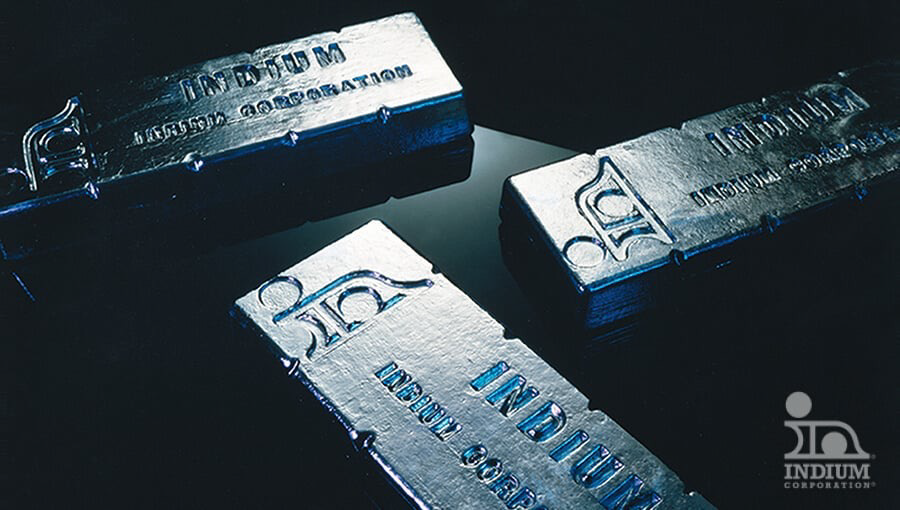
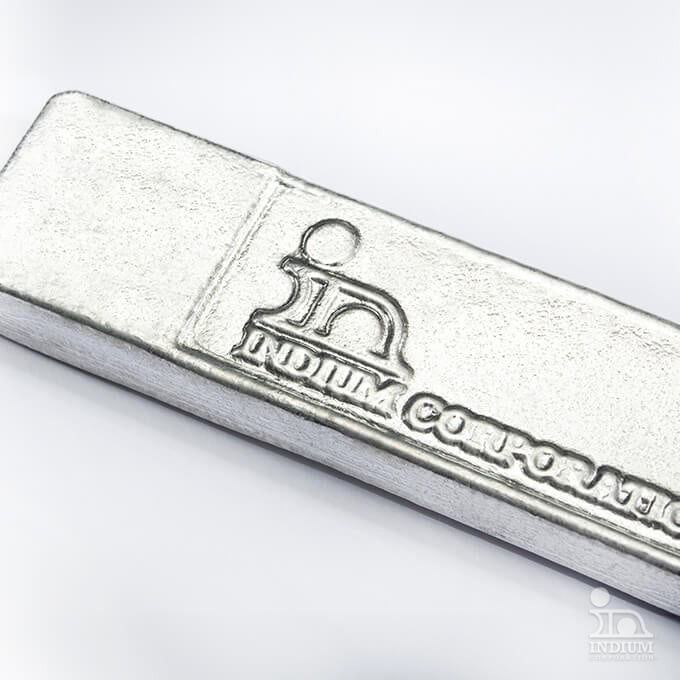
When most people think about the materials that make modern electronics possible, silicon, copper, and gold come to mind. Yet one of the most remarkable elements is one that few people have ever heard of: indium.
Although global production is only about 1,000 tons per year—less than 0.001% of the world’s copper production—indium plays a critical role in many of the technologies that define modern electronics. Touchscreens, flat-panel displays, optical fiber communications, data centers, and high-speed wireless networks all depend on it.
Why does this relatively obscure element appear so often? The answer lies in its unique combination of physical and electronic properties.
The Magic of Indium
Unlike most metals, indium is remarkably versatile. Depending on what it is combined with, it can serve entirely different roles.
With tin oxide, it forms indium tin oxide (ITO), the transparent conductor used in nearly every smartphone, tablet, laptop, and flat-panel television. ITO performs a seemingly impossible task: it conducts electricity while allowing more than 90% of visible light to pass through.
Combine indium with phosphorus, and the result is indium phosphide (InP), one of the world’s fastest semiconductor materials. Electrons travel through InP much more rapidly than through silicon, allowing transistors to operate at frequencies exceeding 100 GHz. This makes InP indispensable for fiber-optic communications, satellite systems, advanced radar, and emerging 6G wireless technology.
Combine indium with gallium and arsenic, and you obtain materials that produce some of the world’s most efficient semiconductor lasers. These tiny lasers power the optical fibers that carry nearly all of the world’s internet traffic. Every time you stream a movie, participate in a video conference, or access cloud computing resources, chances are that the information travels through optical fibers illuminated by indium-containing lasers.
Indium is also a key ingredient in infrared detectors, advanced solar cells used on satellites, and many thermal interface materials that efficiently remove heat from high-performance electronic devices.
Why Indium?
The reason is rooted in physics.
Indium sits in an unusually favorable location in the periodic table. Its electron configuration allows it to form stable compounds with many different elements while producing electronic structures that engineers find extraordinarily useful.
When combined with oxygen and a small amount of tin, indium forms a transparent conductor.
When combined with phosphorus, it forms a semiconductor with extremely high electron mobility.
When combined with gallium and arsenic, it creates a semiconductor whose band gap is ideal for generating laser light at the wavelengths used in fiber-optic communication.
Few other elements can participate in so many technologically valuable compounds.
A Matter of Band-Gaps
Many of indium’s unique properties arise because its compounds possess “just right” electronic band gaps.
- ITO has a wide band gap, making it transparent to visible light while remaining electrically conductive through tin doping.
- Indium phosphide has a direct band gap, allowing it to efficiently emit and detect light.
- Indium gallium arsenide phosphide (InGaAsP) can be engineered to emit precisely the wavelengths required for long-distance fiber-optic communication.
In each case, the electronic structure can be tailored for a specific application.
Small Metal, Huge Impact
Indium illustrates one of the central themes of materials science: the importance of a material is determined not by how much is used, but by what it enables.
The average smartphone contains only a few tens of milligrams of indium. Yet without it, there would be no transparent touch screen, no high-speed optical communications, and far fewer of the semiconductor lasers that power today’s internet.
It is difficult to think of another element that contributes to so many of the technologies underlying the modern electronic world.
Silicon may be the brain of modern electronics, but indium is one of its most versatile enablers. From transparent touchscreens to semiconductor lasers that carry the internet across oceans, indium quietly makes technologies possible that no other single element can match. If you are interested in learning more about how indium can support your products, talk to one of our experts.