乡亲们
想到我经历了电子产品革命的大部分时期,我不禁肃然起敬。在我最初的记忆中,我家和其他大多数人家一样,没有电视机。我们家有一台 21 英寸的黑白电视机,当时花了 250 美元(按现在的汇率约合 2000 美元)。直到我大学毕业,我们才有了一台彩色电视机。而且,还是真空管的。
I remember the first transistor radios playing that classic tune “Transistor Sister.” My first component stereo system used an early integrated circuit. And so it went through 8 tracktapes, cassettes, VCRs, CDs, DVDs, mobile phones, and up to today's smartphones, AppleWatch, and the like:all powered by transistors,and then integrated circuits.
因此,有了这个背景,我很有兴趣听一听克里斯-米勒的《芯片战争》一书的录音带(我去达特茅斯学院的 30 分钟通勤时间是听有声读物的绝佳地点!)。
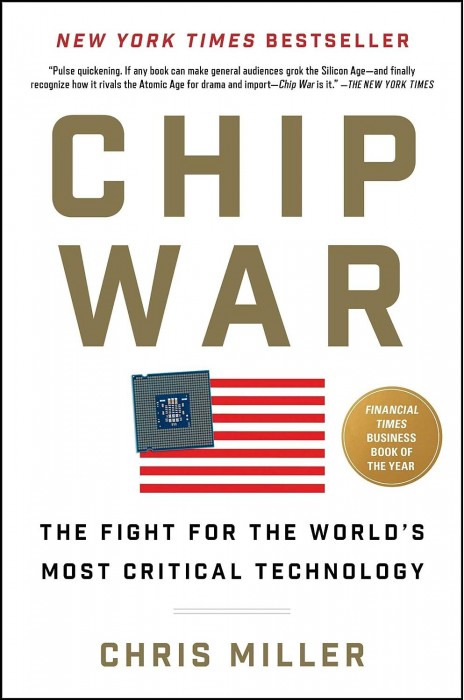
Miller’s review of the history of electronics took me down memory’s lane, but his most important contribution is analyzing the importance of integrated circuits today. Amazon’s summary is tough to improve on:
"你可能会惊讶地发现,微芯片是新的石油--现代世界赖以生存的稀缺资源。今天,军事、经济和地缘政治力量都建立在计算机芯片的基础之上。从导弹到微波炉,从智能手机到股票市场,几乎所有的一切都在芯片的基础上运行。直到最近,美国还在设计和制造最快的芯片,并保持着第一超级大国的领先地位。现在,美国的优势正在丧失,被台湾、韩国、欧洲,尤其是中国大陆的竞争对手所削弱。今天,正如《芯片战争》所揭示的那样,中国每年进口芯片的花费比进口石油还要多,它正在投入数十亿美元进行芯片制造,以追赶美国。这关系到美国的军事优势和经济繁荣。
Economic historian Chris Miller explains how the semiconductor came to play a critical role in modern life and how the U.S. become dominant in chip design and manufacturing and applied this technology to military systems. America's victory in the Cold War and its global military dominance stems from its ability to harness computing power more effectively than any other power. But here, too, China is catching up, with its chip-building ambitions and military modernization going hand in hand.America has let key components of the chip-building process slip out of its grasp, contributing not only to a worldwide chip shortage but also a new Cold War with a superpower adversary that is desperate to bridge the gap.
芯片战争》具有启发性、及时性和引人入胜的特点,它表明,要了解当前的政治、经济和技术状况,我们必须首先了解芯片所发挥的重要作用"。
要在半导体领域保持竞争力,最令人吃惊的挑战之一就是保持有竞争力的制造能力。米勒指出,一个新的半导体制造厂的成本可能超过 200 亿美元,相当于两艘航空母舰的造价,但其先进性却只能维持几年。他指出,另一个有趣的统计数字是,"每天生产的晶体管比人体细胞还多"。
我认为,《芯片战争》 是我们电子行业的必读书。
干杯
罗恩博士