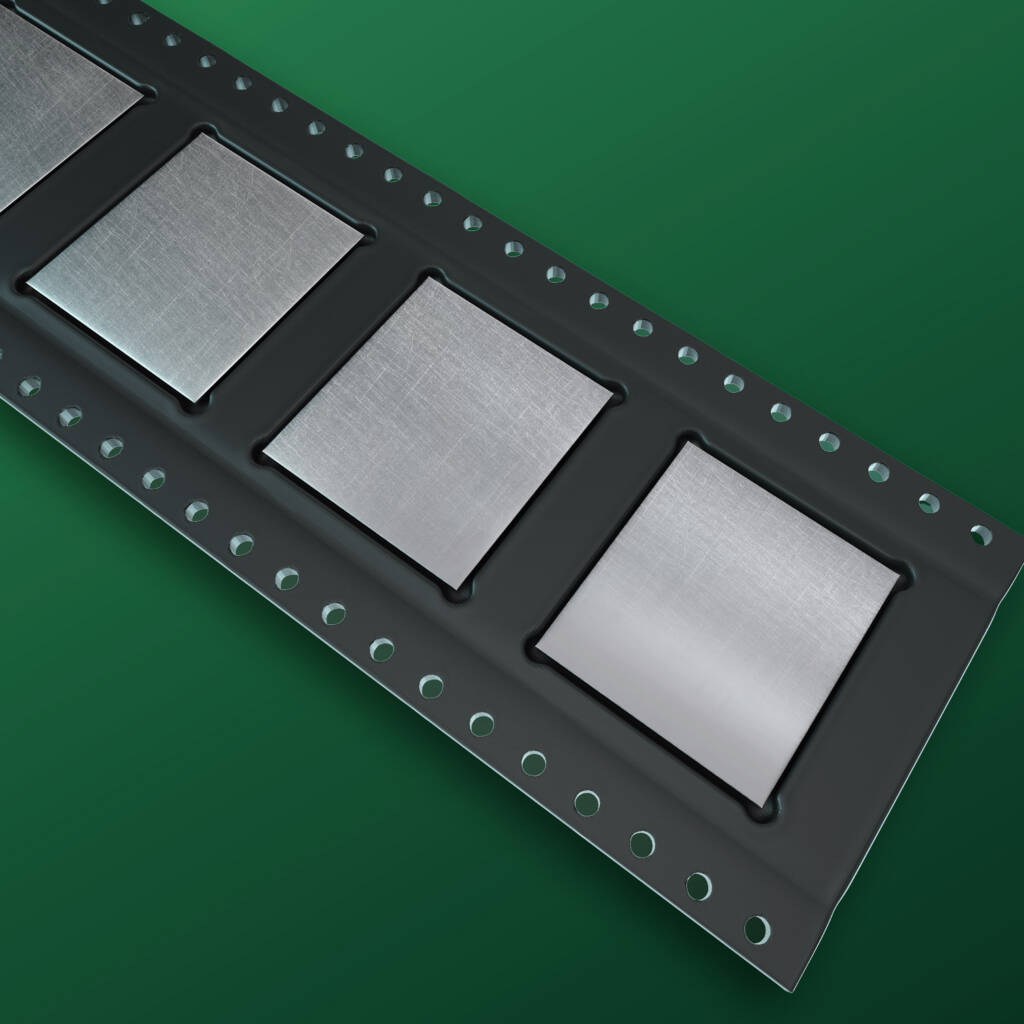
Continuing with the topic of thermal interface material options, a popular material choice is a clad metal thermal interface preform including multiple layers of various metals, or a metal preform clad with an adhesive synthetic material. For specific applications where an interface is sandwiched between two drastically different substrates, clad metal preforms are great. Using clad preforms containing multiple metals, it is possible to clad a stiff material on one side which prevents deforming and a soft, conductive material on the other.
While there are applications that these materials cater to, it is important to realize the full impact of using such a TIM material.
Bob Jarrett最近撰文总结了在现有金属界面材料上添加粘合剂层对阻力的影响。
鲍勃写道
The adhesive on the interface will act as another interface layer, increasing the thermal resistance, additively. The typical acrylic polymer adhesive has a thermal conductivity of ~0.1 W/m-K. If this adhesive is applied as a typical ½ mil (13 μm) film, the resistance increase is:
R = x/k = (13/10000) cm / (0.1/100) W/cm-K = 0.13 cm²-°C/W。
再加上热弹簧的 0.06-0.08 平方厘米-°C/W,总电阻约为 0.2 平方厘米-°C/W。薄薄的一层粘合剂使电阻增加了一倍多。
这篇文章并不是要阻止你使用包覆界面材料,只是要帮助你认识到使用这种材料的潜在影响。界面上每增加一层材料,都会增加一定的阻力。