乡亲们
最近,我采访了铟泰公司 的技术人员埃德·布里格斯(Ed Briggs)。我请埃德分享他对“葡萄球 ”的看法,以及如何将其降至最低。以下是他的评论:
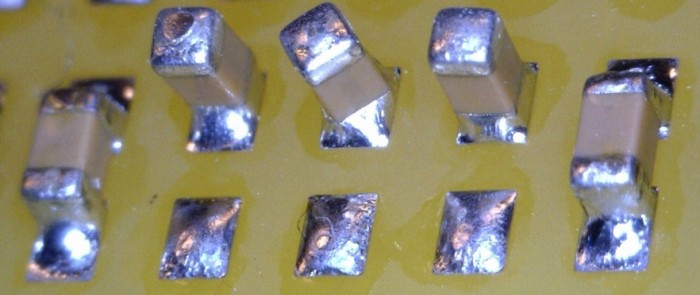
葡萄球 这是一种表现为焊料团块顶部出现未回流焊料颗粒的现象(见上图)。由于无铅回流温度升高、印刷焊膏沉积体积减小,以及微型电子设备对焊膏粉末粒径的要求越来越细,葡萄球 现象的发生频率有所增加。这些因素的综合作用,给焊膏助焊剂带来了巨大的“压力”,要求其去除表面氧化物。 此外,在回流 过程中,助焊剂可能会从焊料合金粉 颗粒上“流失”,在焊膏沉积物周围扩散并积聚。暴露在外的粉末颗粒因此发生氧化。由于缺乏助焊剂的保护或去除氧化层,这些颗粒无法与焊料融合形成焊点。
当焊膏沉积量较少时,相对于总沉积量,暴露在回流炉环境中的表面积会增加。助焊剂与粉末比例的降低意味着,用于去除接合表面氧化层以及焊膏内部焊料合金粉 颗粒的助焊剂量减少。这种情况可能导致葡萄球 。
葡萄球 在阻焊层定义的焊盘中,这种现象要少得多,这可能是因为阻焊层起到了“阻隔”作用,限制了助焊剂的扩散范围。此外,电阻器比电容器更容易出现葡萄球 。电阻器较低的间距会促使助焊剂从焊料颗粒中“毛细吸出”。
A reflow profile with a slow ramp rate (<1C/s) can aggravate the graping phenomena. The solder paste alloy's "viscosity" is unchanged until it reflows when it reaches the melt temperature, however the flux viscosity is easily affected, by each degree in temperature. A slow ramp rate allows plenty of time for the solder flux to "run away" from the solder powder particles, forming a larger pool and spreading out at the base of the solder deposit exposing the top/outer particles to the oven environment, easily oxidizing them. Increasing the ramp rate (1-1.5C/s), allows the flux solvent to volatize quickly, increasing the flux viscosity, lowering its ability to "run-away, " hence minimizing graping.
此外,还开发了现代焊膏,以帮助最大限度地减少葡萄球 。如果葡萄球 是您工艺中的一个问题,您的焊膏供应商的技术团队可能会提供更多建议,以帮助最大限度地减少这一相对较新的缺陷 。
谢谢你,埃德!
干杯
罗恩博士