In our first post about The Right Solder Alloy for the Right Application, we discussed low-temperature solderalloys in general, including bismuth- and indium-containing alloys.
在本篇文章中,我们将与铟市场经理 Jim Hisert 一起更深入地讨论铟合金。
卡罗尔:铟焊料的主要用途是什么?
Jim: Indium is often selected over other solder materials for applications that require the unique properties it has to offer. Often, it comes down to a combination oftwo or more properties. A great example of this is using indium to seal cryogenic equipment. Indium is selected for this application due to: 1) it's softness and 2) the retention of its physical properties at cryogenic temperatures. Another popular use of indium solder is to bond semiconductor die to a lid (heat spreader). As a thermal interface material, indium is: 1) soft enough to comply with the assembly, even as it flexes through thermal cycling, and 2) it has a relatively high thermal conductivity (86W/mK). When you start combining the unique properties of indium, you find some really interesting applications.
Carol: Is indium cost prohibitive for some applications?
Jim: Silver and gold are cost prohibitive for certain applications – but we certainly don’t stop using those materials! Any assembly material's cost is borne to lower the overall cost of ownership and/or to deliver critical performance factors. Relating back to one of the previous examples, less expensive solder alloys could be used as a thermal interface, but indium is used because it transfers heat better and increases the service life of the product. In this case, the advantage of using indium far outweighs its cost. In the applications that indium is currently used for, which are many, it serves an important role which cannot be performed as well by another material. Indium-Tin Oxide (ITO) for touchscreens and flat panel displays is another great example. Several times each year inventors come out with alternative transparent conductive oxide materials, but they fail to win over the existing ITO applications because these materials simply cannot outperform Indium-Tin Oxide. Engineers have proven this by selecting ITO time and time again.
卡罗尔:铟有哪些形态?
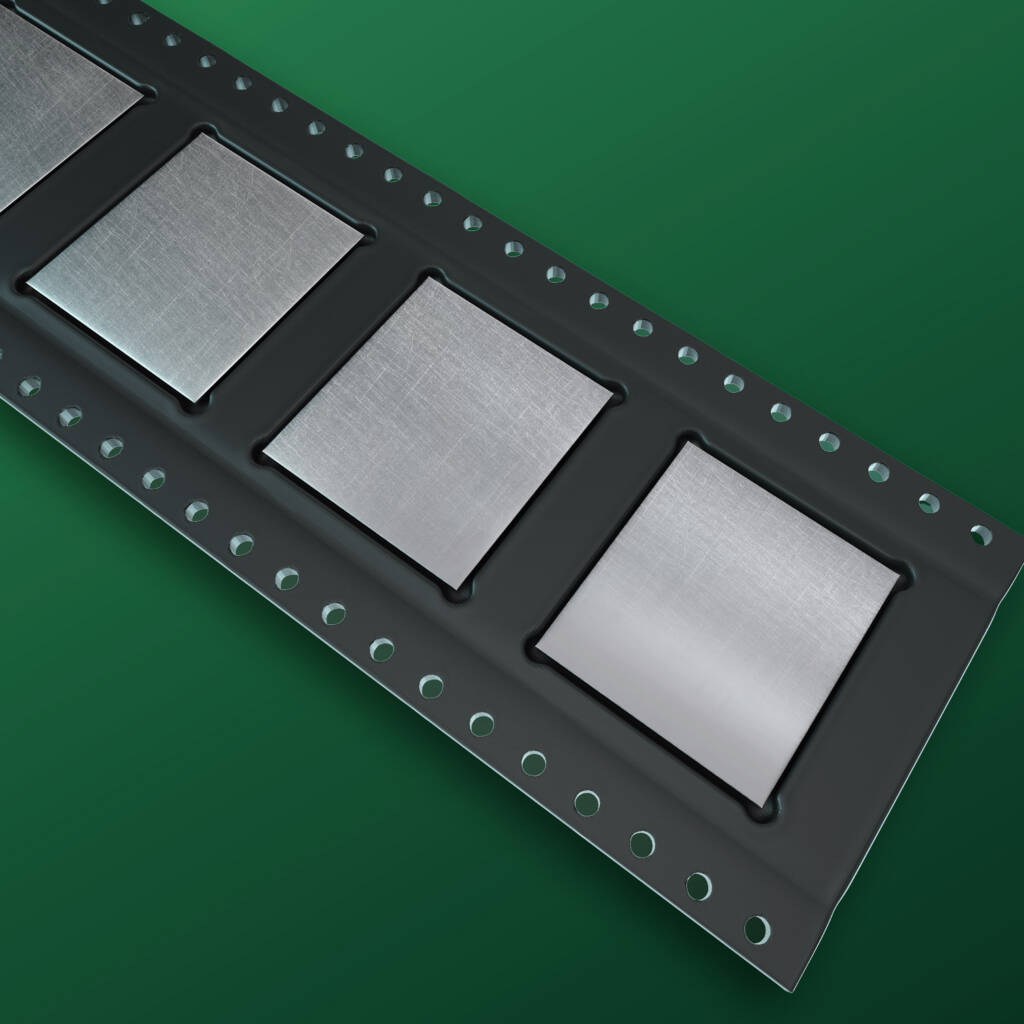
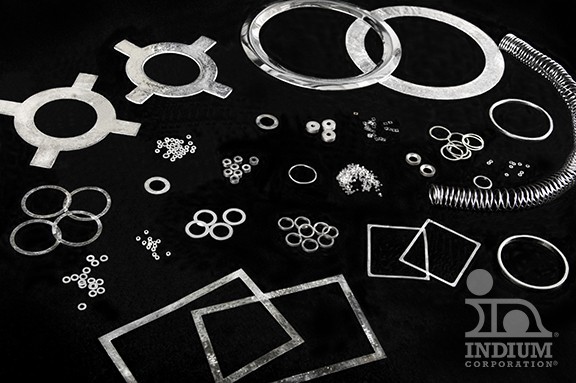 吉姆 Indium is available in its pure form – or as an alloy – in almost any shape you can imagine. Indium is available as wire, ribbon, foil, ingot, spheres, shot, and preforms such as washers, rectangles, discs, frames, and other special shapes. These forms are generally only restricted by the softness of the material. We have found very thin (<50µm) and extremely intricate parts can be difficult to handle, even if we can make them and package them effectively. The material is so soft that long thin parts can sag if not supported properly.
我应该提及的是,铟还可用于 a wide variety of compounds (like indium-tin oxide, indium trichloride, and indium sulfide). These forms are often use to supply indium for chemical reactions or 熔敷. In other words: if you need a very thin layer of indium and a discrete part is too difficult to handle, depositing it directly into the application may be the best solution. Indium can be physically or chemically vapor deposited. Thin layers of indium can be applied by plating, evaporation, sputtering, or chemically (with a precursor material).
卡罗尔:用铟制造什么有什么限制吗?
Jim: Indium is a poor insulator, it is quite soft, and it has a low melting point. With that said, you are interviewing someone who loves indium – so I simply see the value in all aspects of its physical properties and day that: 1) indium is great for bonding insulator materials such as ceramics and other non-metallics, 2) it can be combined with other elements to 创造更坚硬的材料3) 它可以用来制作 高温钎焊合金. Whenever someone has a question about indium's properties or suitability for an application, I suggest they contact our team of Engineers who can help determine if an indium product is right for an application: [email protected].