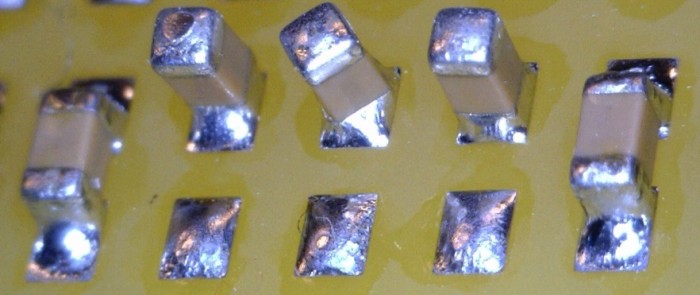
In the world of electronics assembly, the utilization of high-quality alloys is critical to a successful product, and is verified through accurate and precise analysis of the material. IPC J-STD-006C states that “the percentage of each element in an alloy shall be determined by any standard analytical procedure with sufficient resolution.” When I read through the Joint Industry Standard, I found this phrasing to be particularly vague, since many of the routine material inspections refer to a certain IPC method. The majority of labs involved in the analysis of high-purity metals likely employ ICP-OES, or inductively coupled plasma optical emission spectroscopy. Hopefully, this post will shed a little light on the specifics of ICP-OES, as well as the expertise the technique requires.
ICP-OES 的优势在于能够同时高灵敏度地测量所有金属分析物的浓度。在液体介质中制备好样品后,在仪器上进行全面分析只需几分钟。样品溶液被泵入雾化器,在雾化器中转化为雾状。雾气进入石英炬,在那里受到等离子体的作用。等离子体由射频(RF)发生器的线圈产生,该线圈环绕火炬并产生强大的电磁场。气体(几乎总是氩气)被提供给炬,随后被电离,产生高温等离子体(这就是 ICP-OES 的 "ICP")。当样品遇到火炬时,原子会被电离氩电离。每种元素的原子都在不断被剥夺电子并重新获得电子,这一过程会发出电磁辐射(或更简单地说,产生光)。这种辐射的波长是特定元素的定性指标,每个波长的辐射强度与元素的浓度相对应。光进入光谱仪(OES),在这里按波长进行分离,并由探测器测量其强度。由此产生的发射光谱描述了相关波长范围内的辐射强度。与相关元素相对应的波长强度会与既定的校准曲线进行比较和量化。该曲线通常是通过测量一系列含有已知浓度分析物的溶液而形成的线性回归。
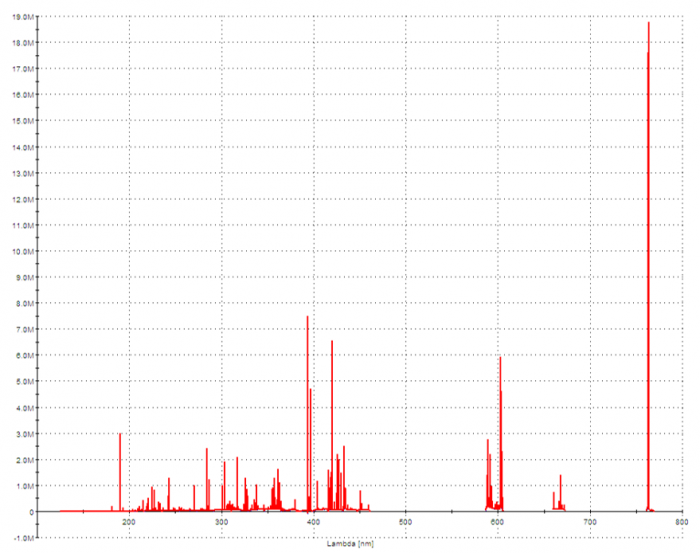
利用 ICP-OES 对 SAC305 进行成分分析:全光谱
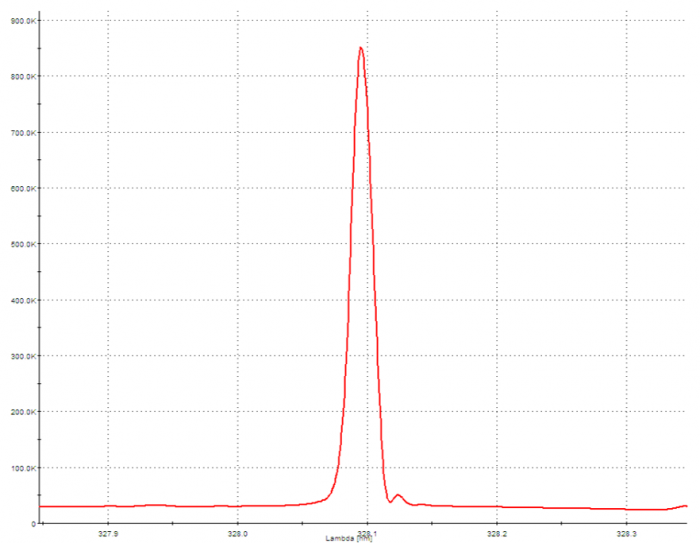
利用 ICP-OES 对 SAC305 进行成分分析:隔离银波长
In our industry, we care about the exact composition of alloys, as well as the concentration of impurities. ICP-OES analysis can be quite finicky, and testing bulk metals for metal analytes presents its own slew of challenges. Efficient dissolution of the samples requires the appropriate choice of acids and application of heat. For example, tin will not go into solution with nitric acid alone, but using hydrochloric acid runs the risk of precipitating silver, so preparing a sample of SAC305 requires some extra thought. If a variety of alloys are to be tested, the order of the analyses needs some rhyme and reason. When a sample is tested for impurities, the concentration of the compositional elements in the sample solution will be quite high. Some elements are more difficult to rinse out of the system than others. If a SAC305 sample is analyzed after a tin-lead sample, there is a concern that the lead levels detected in the SAC305 sample will be erroneously elevated, resulting in an unacceptable false positive. Being aware of the sequence of alloys and the effect each element has on the results will allow for accurate and consistent quantitation of impurities. Additionally, the presence of certain elements can interfere with the measurement of another element. An element will typically have a few wavelengths that are sensitive enough for impurity analysis. The report for a sample may show wildly different results between the wavelengths for a particular element, and a wavelength that works for one alloy matrix may be useless for another matrix. For example, in a sample of SAC305, the lead results for two commonly used wavelengths can agree, but in a sample of gold-tin, the lead results for the same two wavelengths will disagree, with only one result being accurate. It is important to understand the effect each element has on an emission spectrum, as well as the mathematics behind each result on a report.
I’ve only scratched the surface of the intricacies involved in the analysis of metals by ICP-OES. Here at Indium Corporation, our quality team uses their wealth of experience in analytical chemistry to provide quality products that meet or exceed customer needs, expectations, and requirements. For a catalog of solder alloys offered by Indium Corporation, click here to visit the Solder Alloy Selector Guide.