乡亲们
The service temperature for electronics in a modern automobile can be higher than 125C. These high temperatures raise the concern of copper-tin intermetallic growth in solder joints.
Often, we don’t think about the fact that even room temperature is a considerable fraction of the melting temperature of tin, e.g. 293K/505K = 0.5802. A reminder that we have to use the Kelvin scale when making these calculations. However, 125C is 0.788 of the way to tin’s melting point. This temperature is the equivalent of a blacksmith’s wrought iron being at 895C. Figure 1 shows a blacksmith’s forge temperaturechart. Note that 895C is beyond red hot.
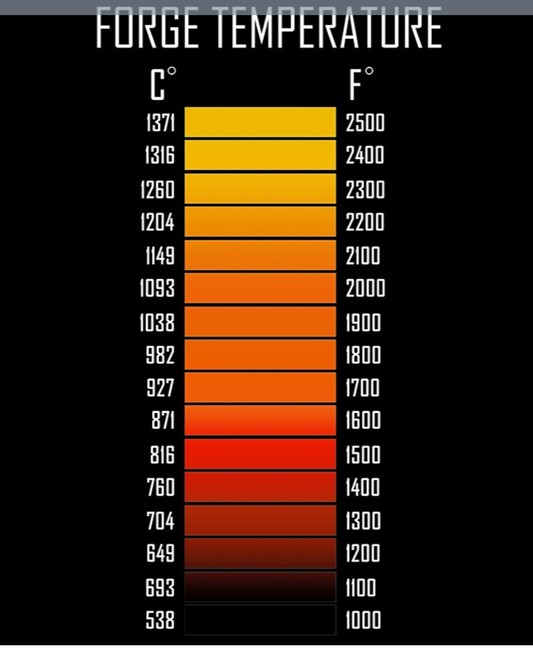
图 1.铁匠的锻造温度表
那么,SAC 焊料的铜锡金属间化合物在 125C 温度下的生长随时间的变化情况如何?菲克扩散定律告诉我们,金属间化合物 D 的增长量由以下公式给出:
D = (k(T)t)^0.5 公式 1。
其中,k(T) 是随温度变化的生长速率常数,t 是时间。Siewert 等人[i]在实验中测量了 SAC 焊料在不同温度和时间下的 D 值。按照 Siewert 的思路,我将使用以小时为单位的时间。利用图 2a 至 2c 中有关 SAC 焊料的数据,我可以在阿伦尼乌斯图中绘出 k,见图 2。
.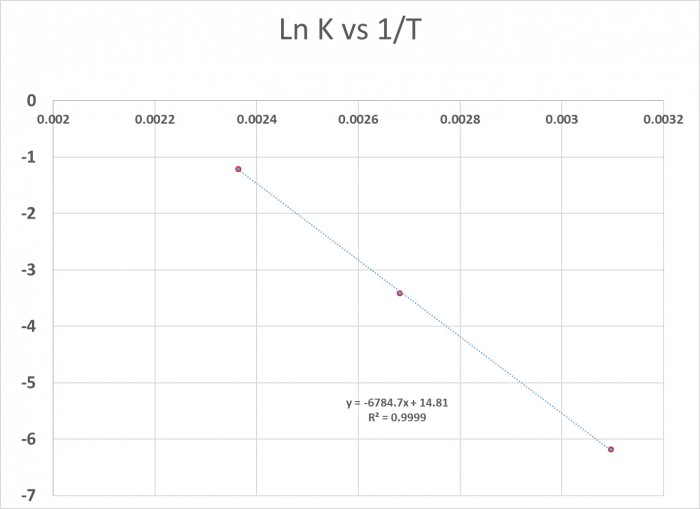
图 2.Siebert 数据的阿伦尼乌斯图
From Figure 2, we see that Ln k = -6784.7/T+ 14.81 or k = exp (14.81)*exp-(6784.7/T). So, at 125C or 398K, k = 0.1068. Using this value of k, we can plot D as a function of time. The results are in Figure 3. Note that both scales are logarithmic. In 1,000 hrs (42 days) the intermetallichas grown 10 microns. In 3 years, it hits 53 microns. We should be cautious, as Siewet'sdata has error bars. But, my sense is that these projections are within a factor of two.
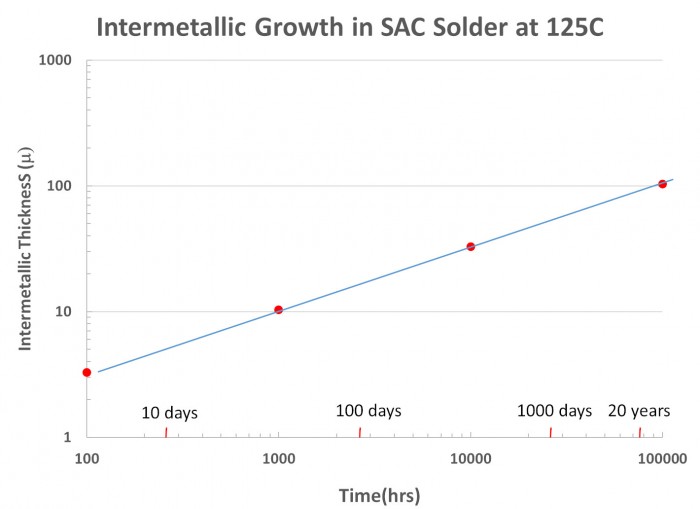
图 3.在 125C 温度下,SAC 焊料中金属间的生长随时间的变化。
What is the effect of these thick intermetallics in a harsh auto environments? No one knows, but I would encourage someone to perform some experiments to find out.
干杯
罗恩博士
[i]Siewert, T. A. etal,Formation and Growth of Intermetallics at the Interface between Lead-Free Solders and Copper Substrates, APEX 1994.