乡亲们
继续我们的锡须系列。在 上一篇文章中,我们讨论了什么是锡须,在这一篇文章中,我们将讨论造成锡须的原因。
锡须主要是由锡中的压应力造成的。如图 1a 所示,造成应力的最常见原因是铜向锡中扩散。当锡在铜上电镀、熔化或蒸发时,这种扩散很常见。铜会优先扩散到锡中,加剧锡须的产生。
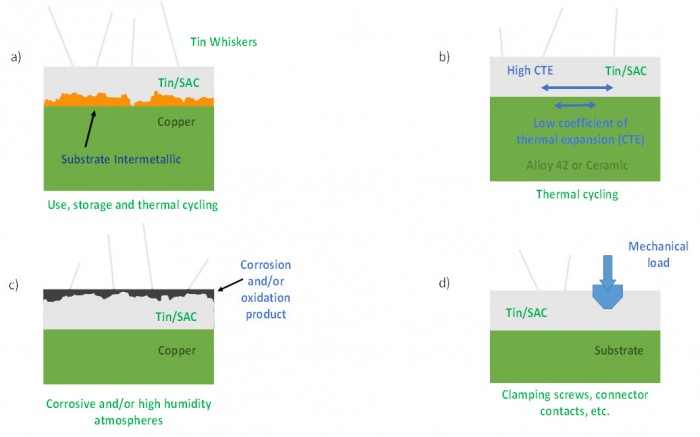
图 1.产生锡须的一些原因
产生锡须的另一个原因是在热膨胀系数低于锡的材料(例如合金 42或陶瓷)上进行镀锡、熔融或蒸发锡时。当温度升高时,锡会受到热膨胀系数较低的材料的约束。这种约束会在锡中产生压应力,从而导致锡须的形成。参见图1b。
较少见的原因是腐蚀(如图 1c 所示)和机械应力(如图 1d 所示)。
由于铜扩散是产生锡须的最可能原因之一,因此这一机制值得详细说明。图 2 左图描述了铜向锡中扩散的机理。这种机制非常强大,铜的扩散往往会在铜中留下空隙。这种空隙被称为 Kirkendall空隙。图 2 的右图是铜(绿色)向锡(黑色)扩散的 X 射线图。
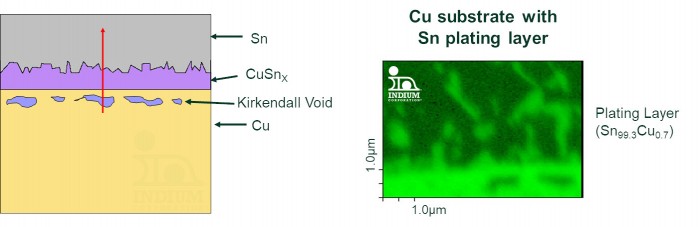
图 2.铜向锡中扩散。
显然,减少这种锡须生长的方法之一就是防止铜扩散到锡中。在今后的文章中,我们将讨论这种方法和其他锡须减缓技术。
干杯
罗恩博士