跳至内容

One-Step OSP BGA Soldering Application

The ball-attach process can be considered a trivial step when creating an FCBGA or similar package, but the final soldering step can be rather complex. There are several variables that impact the final ball-attachment from the number of assembly processes needed before. These processes can be a key factor in the final yield of the FCBGA. Recently, I have been researching materials interactions on a Cu/OSP surface that has gone through a simulated process. The typical process that occurs before the ball-attach process consists of the following:

  • 许多干燥步骤
  • 回流焊
  • 清洗
  • Underfill dispense and cure
  • 激光烧蚀
  • 等离子体
  • 治疗
  • Fluxing, reflow, clean and dry
  • Ball-attach flux transfer

由于这些工艺,需要额外的焊接步骤,形成 "两步 "焊接工艺。需要这样做有很多原因,例如

  • Different OSP’s are used by different PWB fabrication manufactures with different performance properties.
  • OSP is sensitive to high temperature excursions, especially in air
  • OSP is sensitive to exposure to chemical cleaning.

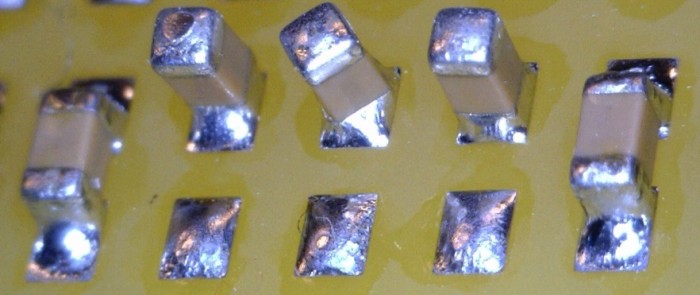
But, the problem with removing the 1st soldering step to create a “one-step” soldering process is that defects can occur, including: poor wetting on the preconditioned OSP surface which would give variability in both joint strength and bump coplanarity, and the “missing-ball”/”big-ball” effects.

So, for the “one-step” soldering process to work, there is now a need for a flux to overcome the inconsistency of the surface finishes as well as inorganic materials that can clearly have an effect on solderability for the opposite side (BGA side) of the substrate. For more information on “one-step” soldering please feel free to contact me, you can alsoview arelated blogpost from Dr. Andy Mackie here: Ball-Attach Flux WS-446-NRD for Poor Quality OSP-wetting

谢谢、