乡亲们
让我们来看看常春藤大学的一名研究生......
约翰-福斯特感到非常幸运。他不仅以最优异的成绩拿到了本科学位,现在还是常春藤大学的研究生,师从著名的帕蒂-科尔曼教授。正当他沉浸在这些愉快的想法中时,科尔曼教授走到了他的桌前,他正在做高级统计学的家庭作业。
“嘿,约翰,我给你安排了个小任务。 ACME公司的首席执行官迈克·马迪根有一家供应商,该供应商保证ACME采购的许多二极管批次中缺陷 为零,但当ACME收到这些批次时,却发现缺陷 率在1%左右甚至更高。你能联系ACME的质量工程师弗兰克·伊阿诺内,看看你能提供什么帮助吗?”帕蒂问道。“我们上学期你在统计学入门课上就讲过这个话题,”她补充道。
"当然,乐意效劳。"约翰答道。
"帕蒂感激地说:"谢谢,我第一次参加SMTA 泛太平洋会议,有很多事情要做。
"哇,"约翰想,"压力山大啊。"
约翰联系了弗兰克,得知该供应商的销售工程师迈克·格拉德斯通表示,他们会从每个10,000件的批次中抽取20个二极管作为样本。如果在这20个样本中未发现缺陷 ,他们声称可以以95%的置信度断言其中不含缺陷 ,因为20个样本中有19个符合要求即为95%,而他们确实未发现缺陷 。
"呀,"约翰想,"这不可能是对的。"
他思前想后,特别是在看了科尔曼教授提到的那堂课的笔记后,终于想出了一个他确信无疑的答案。他联系了弗兰克,他们安排了一次与迈克的通话来讨论这个问题。
在Zoom通话中,大家互相介绍完后,弗兰克问迈克,他们是如何判断一个地块的缺陷 为零的。
"迈克说:"我很高兴有机会向你们解释这个问题。
约翰觉得他的语气似乎很傲慢。
迈克继续说:"那么,你会同意 20 分中有 19 分是 95%吧?
"是的,"弗兰克和约翰回答道。
“所以,如果我们在20个样本中都没有检测到缺陷 ,那么以95%的置信度,该批次中缺陷 的含量为零。如果这20个样本中有一个检测到缺陷 ,我们就不能断言该批次中缺陷 的含量为零,”迈克说道。
“迈克,看看我拍的这张照片,照片中展示了2000颗珠子中的一颗缺陷 (一颗红珠子)。”(见图1。)“如果我从容器左侧选取20颗珠子,我该如何知道缺陷 的概率是0.0005(2000分之1)呢?”约翰问道。
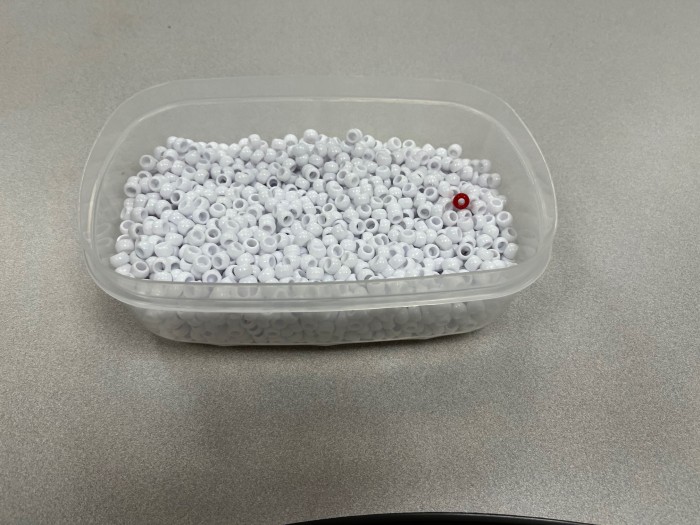
图1. 这颗红珠是2000颗“缺陷”中的一颗。
长时间的沉默。
"弗兰克问道:"迈克,你的答案是什么?
还是没有回音。
“答案是,要确保零缺陷 ,唯一的方法就是对所有样本进行评估,”约翰说道。
"你只是在用那张照片混淆视听,"迈克吐出一句。
"弗兰克说:"我觉得很清楚。
"你们常春藤联盟的人都一样。你们用胡言乱语混淆视听,而任何傻瓜都能看出我是对的。"迈克大叫道。
随后,一些脏话接踵而至,弗兰克切断了迈克的 Zoom 连接。
"我明白你的意思,约翰,"弗兰克说。"但是,你能给我一些数学上的支持吗?"
"当然,"约翰回答道。
“我们来考虑这样一种情况:缺陷 率不为零,但非常低,比如在非常庞大的总体中为1/10,000。当我们选取第一个样本时,它为良品的概率是0.9999((10,000-1)/10,000)。那么,第二个样本为良品的概率是多少?”约翰问道。
"啊,让我想想......0.9999,对吗?弗兰克回答道。
"但这两件事发生的可能性有多大?"约翰问道。
"等等,我记得几年前我上过统计课,它是 0.9999 x 0.9999,"弗兰克得意地说。
"连续三次都是好的可能性有多大?"约翰又问。
"0.99993,"弗兰克自信地回答。
"那么,假设我们取样很多次,我们称之为 n 次,0.9999n = 0.05。这说明了什么?"约翰问道。
"嗯,.........,"弗兰克回答道。
“那么,如果缺陷 的概率是万分之一,这种情况发生的概率有多大?”约翰问道。
"等等,我明白了,这只会发生在0.05%或5%的情况下"。弗兰克兴奋地回答道。
“那么,假设我们不知道缺陷 的发生率,如果我们抽样n个样本却没有发现缺陷 ,我们能得出什么结论呢?”约翰问道。
弗兰克被难住了。
"这样吧,你考虑一下,我们明天再来。现在已经快 6 点了。对了,看看你能不能算出 n 是多少。让我们在上午 10 点进行放大。"约翰提议道。
时间过得很快,约翰和弗兰克又开始 "Zooming "了。
"约翰,你差点要了我的命,我失眠了,但在查看了我的统计手册和做了一些 Youtubing 之后,我想我知道了。
“嗯,如果我们不知道缺陷 的概率,想验证它是否至少为1/10,000,并且我们抽取了n个样本,使得0.9999n= 0.05,那么我们就能以0.95(1 – 0.05)的置信度断言,缺陷 的概率为1/10,000或更低,”弗兰克得意洋洋地说。
"正是如此,"约翰感叹道。
"但 n 是什么?"约翰问道。
"这就是我卡住的地方。我们有方程 0.9999n= 0.05,但我无法求出 n,"弗兰克沮丧地说。
"提示:对数,"约翰回答。
"就是这样,我知道了,"弗兰克热情地说。
弗兰克用计算器算了几分钟,得出了图 2 所示的解决方案。
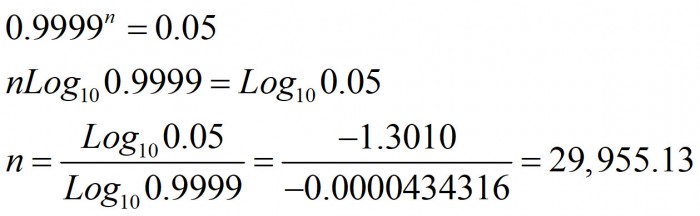
图2.缺陷 的计算
“因此,要想以95%的置信度证明缺陷 的发病率不超过1/10,000,我们就必须抽样调查近30,000名元器件 ,且未发现任何缺陷 ,”弗兰克惊呼道。
“通过观察这个方程,你可以看出,如果缺陷 的速率为零,0.9999就会被1取代,而1的对数是0,因此你需要无限多的样本,”约翰说道。
“所以,要证明 0缺陷 的唯一方法,就是对所有元器件 进行采样,”弗兰克说道。
"对!"约翰答道。
干杯
罗恩博士